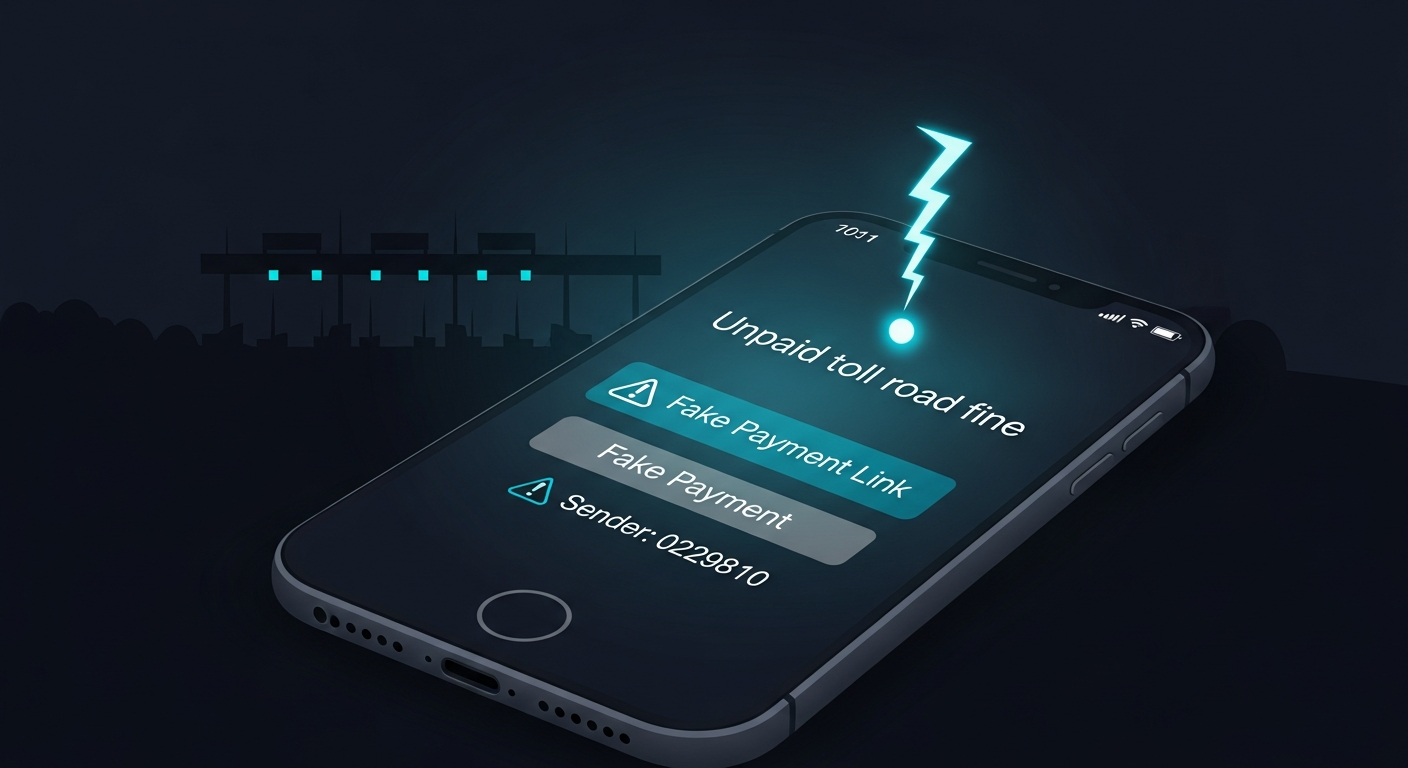
Toll Road Text Scam: 15 Signs
How Toll Road Text Scams Work
15 Signs of a Fake Toll Road Text
What Does a Fake Toll Road Text Look Like? Real Examples
How to Verify a Suspicious Toll Payment Text
How to Avoid Toll Road Text Scams
How AuthentiLens Helps You Detect Fake Toll Texts
What to Do If You Clicked a Fake Toll Road Text
How to Spot a Toll Payment Smishing Text Going Forward
Frequently Asked Questions
Scan Before You Click
Your phone buzzes. A text message says “EZPass: You have an unpaid toll of $4.99. Pay now to avoid a late fee of $75. Click here to pay.” You did drive on a toll road last week. The amount is small. The late fee threat is scary. Your finger hovers over the link. But something feels off. The sender is a random phone number. The link looks strange. The message creates urgency. Before you click, read this.
Learning how to tell if a toll road text is a scam could save you from having your credit card stolen, your identity compromised, or your device infected with malware. Toll road text scams are one of the fastest-growing categories of text message scams in the country. Scammers send millions of these messages every day, hoping you will click the link and enter your payment information. The AuthentiLens Scam Text Checker can analyze any suspicious toll text in seconds.
How Toll Road Text Scams Work
Toll road text scams follow a predictable pattern. Understanding the tactics helps you recognize the warning signs early.
- The small unpaid toll scam. You receive a text saying you have an unpaid toll of a small amount, usually between $4 and $8. The message threatens a large late fee if you do not pay immediately. The link leads to a fake payment page that steals your credit card information.
- The overdue balance scam. You receive a text claiming you have multiple unpaid tolls and a significant overdue balance. The link leads to a fake collection page.
- The account suspension scam. Your toll account has been suspended due to nonpayment. Click the link to reactivate. The link leads to a fake login page that steals your credentials.
- The fake refund scam. You overpaid a toll and are due a refund. Click the link to claim it. The link leads to a fake page that steals your personal information.
- The missed toll scam. You passed through a toll without paying. Click the link to pay the missed toll. The link leads to a fake payment page.
These are all variations of the same common online scam tactics applied to a context that creates immediate anxiety: money owed.
15 Signs of a Fake Toll Road Text
If you notice several of these signs, do not click anything. Verify first.
1. The text comes from a regular phone number, not a short code
Legitimate toll agencies use short codes or specific verified numbers for text notifications. If the text comes from a regular 10-digit phone number or an international number, it is almost certainly a scam. This is the most reliable fake toll road text sign.
2. The message creates urgency or panic
“Pay now to avoid a late fee. Your account will be sent to collections. Immediate action required.” Scammers use urgency to stop you from thinking. Real toll agencies do not threaten immediate collections via text.
3. The amount is very small
The text claims you owe $3.99, $4.99, or $7.50. Scammers use small amounts because you are more likely to pay without thinking. Real toll agencies send bills by mail or through their official apps. They do not demand small payments via text link.
4. The message asks you to click a link and pay
“Click here to pay your unpaid toll. Pay now to avoid penalties.” Legitimate toll agencies do not send payment links via text message. Do not click. Instead, check if the link is suspicious before doing anything.
5. The link address is not the official toll agency website
Press and hold the link on your phone to preview it. Scammers use links like ezpass-payment.net or sunpass-alerts.com. If the link does not go to the official toll agency website, it is a scam. Check how to know if a website is fake before you enter any payment details.
6. The message threatens a large late fee
“You owe $4.99. Pay now or a late fee of $75 will be added. Your balance will double if not paid immediately.” Scammers use the threat of large fees to scare you into paying. Real toll agencies give you time to pay without massive penalties.
7. The message has spelling or grammar errors
Real toll agency messages are professionally written. Scam texts often have typos or strange word choices: “We have detect unpaid toll on you vehicle.”
8. The message uses a generic greeting
“Dear driver. Dear customer. To the registered vehicle owner.” Legitimate toll agencies have your account information. They will address you by name or reference your license plate. Generic greetings are an unpaid toll text scam sign.
9. You have not driven on a toll road recently
If you have not used any toll roads in the past month, any toll text is automatically a scam. Scammers send these messages to millions of numbers at random. They do not know who has actually used toll roads.
10. The message has no specific information about the toll
The text does not say when the toll occurred, where it occurred, or what your license plate number is. Real toll notifications include specific details about the transaction.
11. The message asks for personal information
“Please enter your full name and address. Verify your identity with your Social Security number.” Your toll agency already has this information. They will not ask for it via text.
12. The text claims to be from a toll agency you do not use
If you live in Florida and receive a text about EZPass (used in the Northeast), that is a clear fake EZ Pass text scam sign. If you live in the Northeast and receive a text about SunPass, that is a fake SunPass text scam sign. Geographic mismatch is an instant red flag.
13. The message includes a phone number to call
“Call this number to dispute your toll charge.” If you call, a scammer will answer and ask for your payment information. Always use the official number from the toll agency's real website.
14. The link leads to a site asking for credit card information
If you accidentally click the link, look at the website. Is it asking for your credit card number, expiration date, and CVV right away? That is a fake toll bill text sign. Exit immediately without entering anything.
15. Your gut says something is wrong
Trust this feeling. If something feels off, do not click anything. When in doubt, log into your toll account directly through the official website or app.
What Does a Fake Toll Road Text Look Like? Real Examples
Example 1: The EZPass Scam
“EZPass: You have an unpaid toll invoice of $4.99. To avoid a late fee of $75, please pay immediately: https://ezpass-payment-verify.com”
The sender is a regular phone number. The amount is small. The late fee is disproportionately large. The link is not the official E-ZPass website. This is a textbook fake EZ Pass text scam.
Example 2: The SunPass Scam
“SunPass: Your account has an overdue balance of $7.50. Your account will be suspended if not paid within 24 hours. Pay here: https://sunpass-alerts.net”
The message creates urgency. The link does not go to sunpass.com. The sender is not a verified SunPass short code. This is a classic fake SunPass text scam sign.
Example 3: The Generic Toll Scam
“Toll Roads Notice: You have an unpaid toll of $5.99. Late fees will apply. Please settle your balance here: https://toll-payment.com”
No specific toll agency is named. The link is generic. The greeting is generic. This toll payment smishing sign is one scammers send to millions of numbers at once.
How to Verify a Suspicious Toll Payment Text
- Do not click the link. Do not reply. Do not call any phone number in the text.
- Check your recent driving history. Have you driven on any toll roads recently? If not, the text is a scam.
- Log into your toll account directly. Open a new browser tab. Type the official toll agency website address yourself. Log into your account. Check for any unpaid tolls or balances.
- Check the official toll agency app. Most toll agencies have official apps. Open the app on your phone and check your balance there.
- Scan the text and link with AuthentiLens. This is the most reliable way to verify a suspicious message before you reply . Paste the message text and the link into AuthentiLens. The tool analyzes the link without you clicking it and tells you if it is dangerous, suspicious, or safe.
How to Avoid Toll Road Text Scams
- Never click links in unexpected text messages claiming to be about unpaid tolls.
- Never pay a toll through a link sent via text message.
- Check your official toll account directly through the app or website whenever you get an alert.
- If you are unsure, call the toll agency using the official number from their website, never a number from the text.
- Remember that real toll agencies send bills by mail, not by text with payment links.
- Use AuthentiLens to scan suspicious texts before you trust them.
How AuthentiLens Helps You Detect Fake Toll Texts
AuthentiLens gives you a simple way to check suspicious toll road texts. Paste the message text and the tool analyzes it for scam patterns, urgency, and phishing scripts. Paste any link from the text and the tool scans it without you clicking it. You get an immediate verdict on whether the link is dangerous, suspicious, or safe. Upload a screenshot and AuthentiLens analyzes the visual elements for signs of forgery. You also get 5 free scans to start, and AuthentiLens Pro is $9.99 per month for unlimited scans.
What to Do If You Clicked a Fake Toll Road Text
If you already clicked a link in a fake toll road text and entered your credit card information, act immediately.
- Contact your bank or credit card company immediately. Tell them you may have entered your credit card information on a fake website. Ask them to monitor for fraud or issue a new card.
- Check your credit card statements for any unauthorized charges, including small test charges.
- If you entered personal information like your name and address, monitor your credit reports for signs of identity theft.
- If the link downloaded anything to your device, run a security scan with trusted antivirus software.
- Report the scam to the FTC at reportfraud.ftc.gov and the FBI's IC3. Log it at the BBB Scam Tracker. The USPS smishing guidance page also explains how to forward toll and package scam texts to 7726 (SPAM).
- Forward the scam text to your actual toll agency so they can warn other customers.
- Delete the text message. Do not keep it on your phone.
How to Spot a Toll Payment Smishing Text Going Forward
The best protection is a simple habit. Never pay a toll through a link sent via text message. When you receive a text about an unpaid toll, do not click anything. Open your official toll account app or website directly and check your balance there. Be suspicious of small amounts paired with large late fee threats. These are classic fake toll road text signs. Remember that real toll agencies do not demand immediate payment via text message.
Frequently Asked Questions
How can I tell if a toll road text is a scam?
Check the sender number. Look for urgency, small unpaid amounts, large late fee threats, suspicious links, generic greetings, and spelling errors. Do not click links. Log into your toll account directly through the official website.
Why am I getting toll scam texts even though I don't drive on toll roads?
Scammers send these texts to millions of phone numbers at random. They do not know who has actually used toll roads. They are hoping some people will be worried enough to click. Delete the text and do not engage.
How do I spot an unpaid toll text scam?
The text claims you owe a small amount like $4.99 or $7.50 and threatens a large late fee. It creates urgency to pay immediately through a suspicious link. Check your toll account directly through the official website or app instead.
How can I verify a suspicious toll payment text without clicking anything?
Do not click the link. Log into your toll account directly through the official website or app. Check your balance there. Call the toll agency using the official number from their website.
What is the single most important rule for avoiding toll road text scams?
Never click the payment link in a text message claiming to be about an unpaid toll. Always log into your toll account directly through the official website or app. This one habit will protect you from almost all toll text scams.
Scan Before You Click
Toll road text scams are designed to trick you with small amounts and scary late fees. They want you to click before you think. Do not let them win. Before you click any link in a toll road text, pause. Check the sender. Do not click. Log into your toll account directly. And when you are unsure, scan it.
Government text scams follow the same pattern across agencies. See our guides on DMV text scams and verification code text scams.
Try 5 free scans now at AuthentiLens and check suspicious texts and links before you trust them.