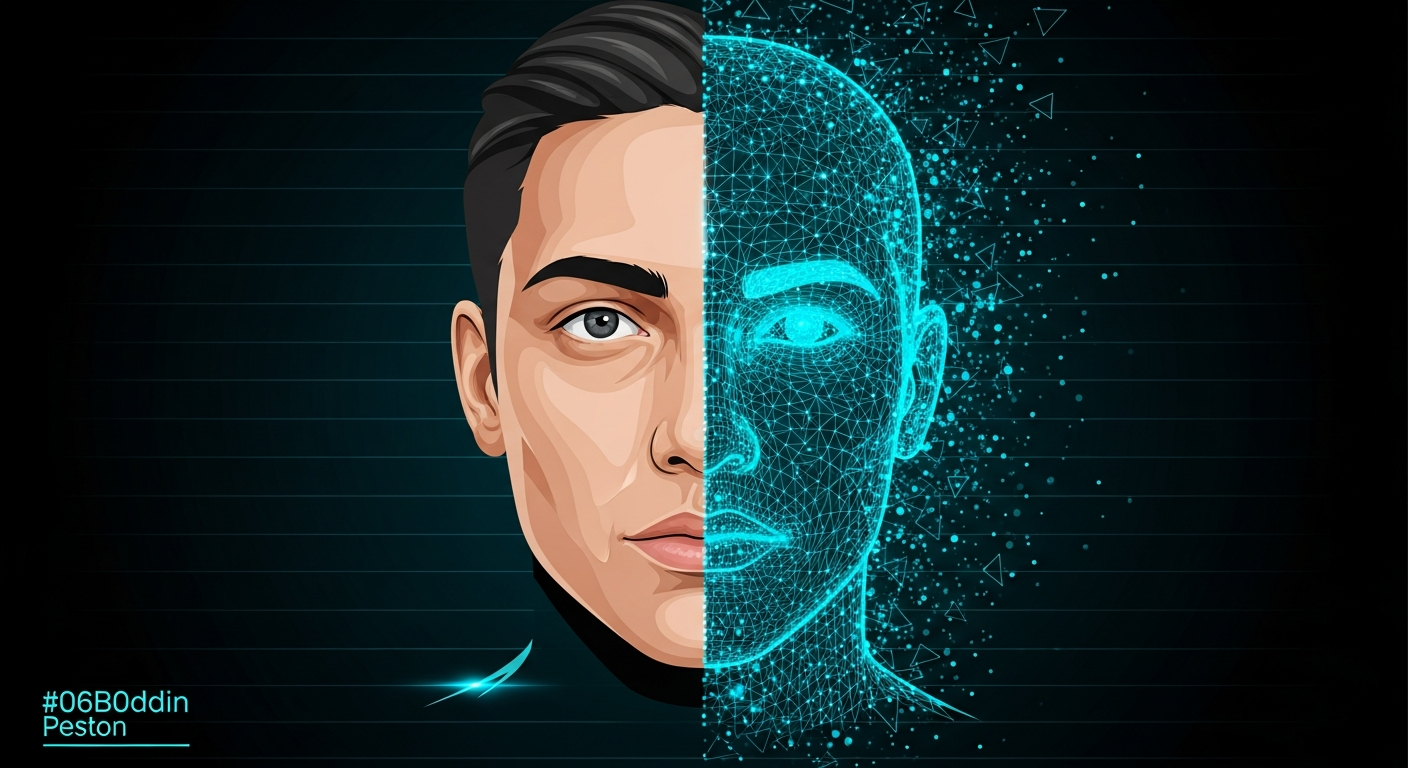
What Is a Deepfake? How to Spot One
What Is a Deepfake? Simple Definition
Deepfake Meaning and Terminology Explained
How Are Deepfakes Made? A Simple Explanation
Why Are Deepfakes Dangerous?
How Deepfakes Are Used in Scams
Deepfake Examples You Need to Know
What Is the Difference Between Edited Video and Deepfake?
How to Recognize Deepfakes
How AuthentiLens Helps Detect Deepfakes
What to Do If You Receive a Deepfake
How to Avoid Being Fooled by Deepfake Content
Frequently Asked Questions
You scroll through social media. You see a video of a famous actor saying something shocking. The video looks real. The voice sounds right. The face moves naturally.
But the actor has publicly said the opposite for years. You feel confused. Is the video real or fake?
You have just encountered a deepfake.
Deepfakes are everywhere. They are used in scams, misinformation campaigns, and identity theft. Understanding what is a deepfake is essential for anyone who spends time online. They are also the engine behind a wave of new impersonation scams, which is why our breakdown of the signs of an impersonation scam pairs naturally with this guide.
This guide explains the deepfake meaning in plain language. It shows you deepfake examples. And it helps you understand why deepfakes are dangerous and how to protect yourself, including with the AuthentiLens Deepfake Video Detector .
What Is a Deepfake? Simple Definition
What is a deepfake? A deepfake is a video, audio clip, or image that has been created or manipulated using artificial intelligence. The AI makes the fake content look and sound real.
The word deepfake combines two words. Deep learning, which is a type of AI. And fake, which means not real.
In a deepfake video, one person's face is swapped onto another person's body. Or a person appears to say something they never actually said.
In deepfake audio, a person's voice is cloned. The AI generates new audio of that person saying anything the creator types.
Deepfakes are dangerous because they are hard to detect. Your eyes and ears tell you the content is real. But it is completely fabricated.
Deepfake Meaning and Terminology Explained
Let us break down the deepfake definition further.
Deepfake video. A video where a person's face has been replaced with another person's face. The result looks like the second person is in the video. Our walkthrough on how to tell if a video is a deepfake is the right next step if you want to learn the visual checklist.
Deepfake audio. A voice recording that was generated by AI. The voice sounds like a real person, but the person never said those words. Our companion guide on how to tell if audio is AI generated covers the audio side in depth.
Synthetic media. A broader term for any media created by AI. Deepfakes are a type of synthetic media. The same techniques apply to still images, which we cover in our guide on how to tell if a photo is fake or AI generated .
Face swapping. The most common deepfake technique. One person's face is mapped onto another person's body.
Voice cloning. An AI learns a person's voice from samples. Then it generates new audio of that person speaking.
Understanding these terms helps you grasp the deepfake video meaning and why this technology is so powerful.
How Are Deepfakes Made? A Simple Explanation
You do not need to be a computer scientist to understand how deepfakes are made.
The AI is trained on many images or audio samples of the target person. For a video deepfake, the AI looks at hundreds or thousands of photos of the person's face from different angles. It learns how the face looks in different lighting, different expressions, and different positions.
Then the AI can map that face onto another person's body in a video. It adjusts the face to match the movements of the person underneath.
For audio deepfakes, the AI listens to recordings of the person's voice. It learns their tone, pitch, cadence, and pronunciation. Then it can generate new audio of that person saying anything.
The result is synthetic media that looks and sounds incredibly real. The technology is improving rapidly. Deepfakes from just a few years ago were easy to spot. Modern deepfakes can be almost impossible to detect with the naked eye or ear.
Why Are Deepfakes Dangerous?
Deepfakes are dangerous for several reasons.
They spread misinformation. A deepfake video of a politician saying something damaging can go viral before anyone can fact check it. The damage is done even after the video is proven fake.
They enable scams. Scammers use deepfake audio to impersonate family members. A grandparent receives a call that sounds exactly like their grandchild. The voice says they are in trouble and need money. The grandparent sends money to a scammer. For a full playbook on protecting older relatives from these calls, see our guide on how to protect elderly parents from scams .
They destroy reputations. Deepfakes can place innocent people in compromising situations. Revenge deepfakes are used to humiliate and blackmail victims.
They erode trust. When deepfakes become common, people stop trusting any video or audio. This makes it harder for real evidence to be believed.
Understanding the deepfake scam explanation helps you see why this technology is a serious threat. The wider playbook is in our guide to common online scam tactics .
How Deepfakes Are Used in Scams
Scammers are using deepfakes in increasingly sophisticated ways.
The family emergency scam. A scammer clones a family member's voice using a few seconds of audio from social media. They call a grandparent or parent. The voice says they are in trouble and needs money immediately. The victim sends money. If you receive any urgent call like this, our checklist on how to tell if a phone call is a scam is the right next step.
The CEO scam. A scammer clones a company executive's voice. They call an employee and demand an urgent wire transfer. The employee follows orders because the voice sounds like their boss.
The celebrity endorsement scam. A deepfake video shows a celebrity promoting a fake investment or product. Fans believe the endorsement and lose money.
The blackmail scam. A scammer creates a compromising deepfake video of a person. They threaten to release the video unless the victim pays.
The fake friend scam. A scammer creates a deepfake profile using your friend's photos and a cloned voice for video calls. To learn how to catch these accounts before they message you, read how to spot a fake social media profile .
These scams are effective because the deepfakes are convincing.
Deepfake Examples You Need to Know
Here are real world deepfake examples.
Example 1: The Tom Cruise deepfake
A TikTok account posted deepfake videos of Tom Cruise. The videos showed the actor doing magic tricks, playing golf, and telling stories. The videos were incredibly realistic. Millions of people watched them. Many thought they were real. The account was eventually revealed to be a deepfake creator.
Example 2: The CEO voice deepfake
A company received a call from someone sounding exactly like their CEO. The voice said to transfer money to a vendor immediately. The employee made the transfer. The voice was AI generated. The company lost hundreds of thousands of dollars.
Example 3: The political deepfake
A deepfake video of a politician appeared on social media. The video showed the politician saying something controversial. The video spread quickly. By the time fact checkers proved it was fake, millions of people had already seen it.
These examples show why you need to know how to recognize deepfakes.
What Is the Difference Between Edited Video and Deepfake?
Not every manipulated video is a deepfake. There is an important difference.
Traditional video editing involves cutting footage, adding effects, or changing colors. The original content is still there. The editor is working with what was actually filmed.
Deepfakes use AI to generate new content that never existed. The person in the deepfake never said those words. The face in the video is not the person who was filmed.
A deepfake creates something entirely fake. Traditional editing rearranges what is real.
This distinction matters because deepfakes are much harder to detect than edited videos.
How to Recognize Deepfakes
Here are signs that a video might be a deepfake.
Look at the face. Does the skin look waxy or too smooth? Do the edges of the face look blurry? Does the hair look strange?
Look at the eyes and mouth. Does the blinking look unnatural? Does the lip sync match the audio? Are the teeth a single white block?
Look at the lighting. Does the light on the face match the background? Are shadows consistent?
Look at the audio. Does the voice sound slightly robotic? Is the breathing unnatural?
Look at the source. Was the video posted by an account you trust? Is the same clip available on the official channel of the person it features? Verifying the speaker is sometimes more useful than verifying the pixels, which is why our guide on how to tell if someone online is real is a useful companion.
But here is the hard truth. Modern deepfakes are very good. Some are almost impossible for the human eye to detect. That is why tools like AuthentiLens are so important.
How AuthentiLens Helps Detect Deepfakes
AuthentiLens gives you a simple way to check for deepfakes.
You can upload a suspicious video. The tool analyzes the video frame by frame. It looks for inconsistencies in lighting, skin texture, blinking patterns, and lip sync.
You can upload audio. AuthentiLens analyzes the audio for signs of AI generation, unnatural breathing, and synthetic voice patterns.
You can upload images. The tool checks for manipulation and AI generation.
The tool does the analysis that human eyes and ears cannot do. It gives you a clear result. The content appears authentic. Or the content shows signs of deepfake manipulation.
You do not need to be a tech expert. You just need the habit. When you see a suspicious video, audio, or image, scan it before you trust or share it.
You get 5 free scans to start. AuthentiLens Pro costs $9.99 per month for unlimited scans.
What to Do If You Receive a Deepfake
If you suspect you have received a deepfake, here is what to do.
First, do not share it. Sharing a deepfake spreads misinformation and helps the scammer.
Second, do not act on any requests in the deepfake. Do not send money. Do not click links. Do not share personal information.
Third, verify through another channel. If the deepfake claims to be from a family member, call that family member directly using a known phone number. Our 7 step process for how to verify suspicious messages before you reply works for video and audio messages too.
Fourth, scan the content with AuthentiLens. Get a clear answer about whether it is manipulated.
Fifth, report the deepfake to the platform where you found it. Most social media platforms have policies against manipulated media.
Sixth, lock down your own digital footprint so a scammer cannot easily clone you next. The playbook in how to protect yourself from impersonation online covers exactly that.
How to Avoid Being Fooled by Deepfake Content
The best protection is a simple habit. Verify before you trust.
If you see a shocking video, pause before you share. Ask yourself if the video could be a deepfake. Look for the warning signs. Scan it with AuthentiLens.
If you receive a voice message asking for money, verify through another channel. Call the person back using a known phone number. Ask a personal question only they would know.
Make this a habit for the whole household. Our guide on online safety tips for families builds the verification habit into a shared family rule, including a family safe word that defeats voice clones.
And remember this rule. Never send money based on a video or audio alone. Always verify through an independent channel.
Frequently Asked Questions
What is a deepfake in simple terms?
A deepfake is a video, audio clip, or image that has been created or manipulated using artificial intelligence. The AI makes the fake content look and sound real. The person in the deepfake never actually said or did what you see.
What does deepfake mean?
Deepfake combines deep learning, a type of AI, and fake. It means synthetic media created by AI that appears real.
How are deepfakes made?
An AI is trained on many images or audio samples of a person. It learns their face or voice. Then it generates new content of that person saying or doing anything.
Why are deepfakes dangerous?
They spread misinformation, enable scams, destroy reputations, and erode trust in real media.
How are deepfakes used in scams?
Scammers use deepfake audio to impersonate family members and demand money. They use deepfake videos to promote fake investments or blackmail victims.
What is the difference between edited video and deepfake?
Traditional editing works with real footage. Deepfakes use AI to generate entirely new content that never existed.
How can I recognize deepfakes?
Look for waxy skin, blurry face edges, unnatural blinking, bad lip sync, inconsistent lighting, and robotic audio. But modern deepfakes are very hard to detect with human senses alone.
How can AuthentiLens help with deepfakes?
AuthentiLens analyzes videos, audio, and images for signs of AI generation and manipulation. It gives you a clear result. Dangerous. Suspicious. Or safe.
Scan before you trust.
Deepfakes are real. They are getting better. And scammers are using them to steal money and spread lies. You cannot always trust what you see and hear anymore. But you can verify. AuthentiLens gives you 5 free scans to check for deepfakes and other manipulated media.
Try 5 free scans now →For a dedicated deepfake detection tool, see our guide to AI deepfake detectors and how they work.