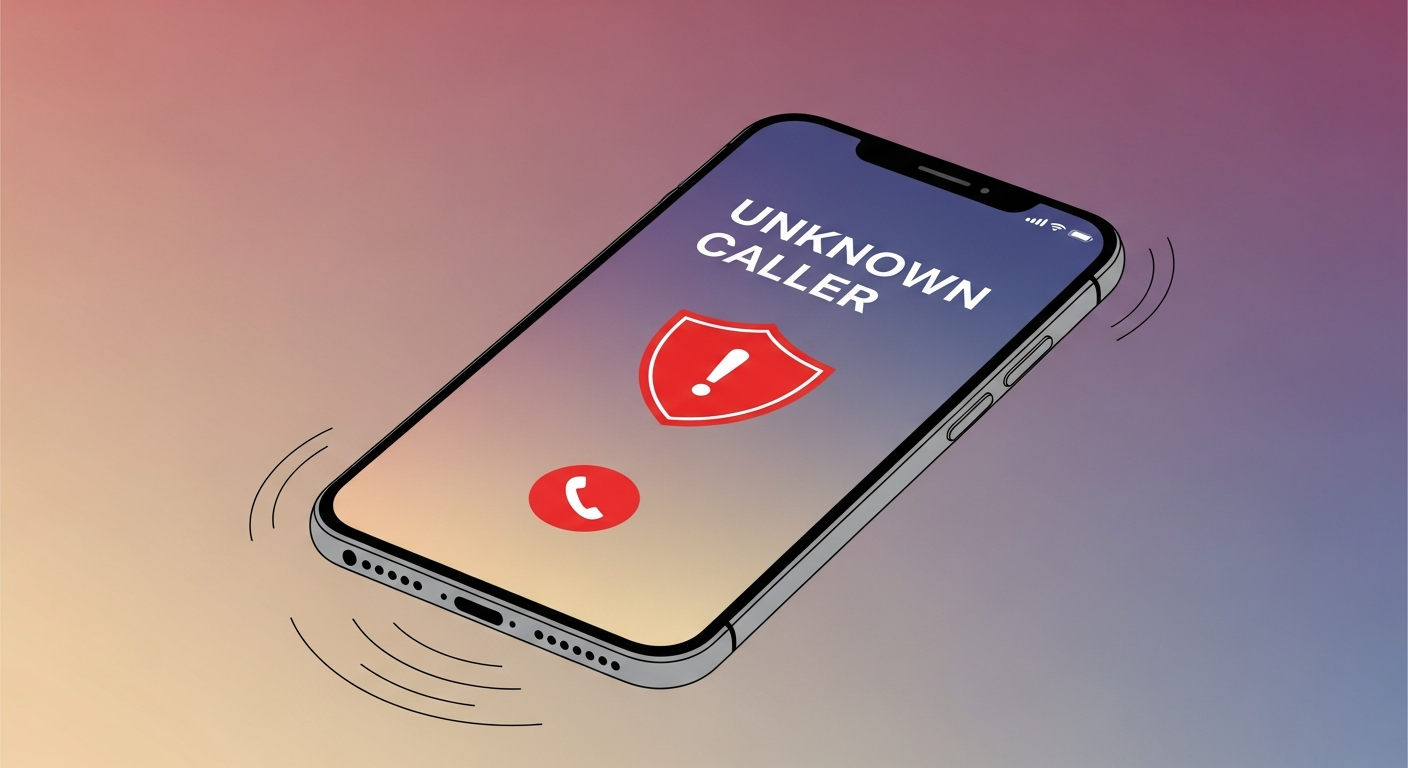
Phone Call Scam: 12 Warning Signs
Common Types of Scam Phone Calls
12 Warning Signs of a Scam Phone Call
What Does a Scam Phone Call Sound Like? Real Examples
How to Verify a Suspicious Caller Before Sharing Information
Signs of an IRS Scam Call and Other Government Impersonations
How to Tell If a Caller Is Pretending to Be a Bank
How AuthentiLens Helps With Scam Call Follow Up
What to Do If You Answered a Scam Call or Gave Information
How to Avoid Phone Scams Going Forward
FAQ
Scan Before You Trust
Your phone rings. You answer. The caller says they are from your bank's fraud department. There has been suspicious activity on your account. They need you to verify your identity immediately.
Your heart races. You do not want someone stealing your money. You start to feel panicked.
But something feels wrong. The caller has an accent you do not recognize. They are rushing you. They want information your bank has never asked for before.
You ask yourself a simple question. Is this call real or a scam?
Learning how to tell if a phone call is a scam could save you from losing money, having your identity stolen, or getting your accounts compromised. Scam phone calls are increasing. Scammers are getting better at sounding legitimate.
This guide walks you through the most common scam phone call signs. It gives you practical steps to verify any suspicious caller. And it shows you what to do if you already answered a scam call, including how to scan any follow-up texts or voicemails with AuthentiLens .
Common Types of Scam Phone Calls
Before you can spot a scam call, you need to know what you are up against.
- The bank impersonation scam. The caller claims to be from your bank's fraud department. They say there is suspicious activity on your account. They need you to verify your identity or move money to a "safe account."
- The IRS or government scam. The caller claims to be from the IRS, Social Security Administration, or another government agency. They say you owe back taxes or your benefits are suspended. They demand immediate payment.
- The tech support scam. The caller claims to be from Microsoft, Apple, or another tech company. They say your computer is infected with a virus. They ask for remote access. Then they charge you for fake repairs or install malware.
- The grandparent scam. The caller pretends to be your grandchild or another family member. They say they are in trouble. They need money immediately for bail, a hospital, or a lawyer. They beg you not to tell other family members.
- The utility scam. The caller claims to be from your electric, water, or gas company. They say your service will be disconnected if you do not pay immediately.
- The robocall scam. An automated recording says there is a problem with your account, your warranty, or your taxes. It asks you to press a number or call back. When you do, a scammer answers.
Knowing these patterns helps you recognize fraud call red flags early.
12 Warning Signs of a Scam Phone Call
If you notice several of these scam phone call signs, hang up immediately.
1. The caller creates urgency or panic
Your account will be closed in one hour. You will be arrested if you do not pay now. Your service will be disconnected today.
Scammers use urgency to stop you from thinking. They want you to act before you verify. Real organizations do not threaten you over the phone.
2. The caller asks for personal information
Please confirm your Social Security number. What is your bank account number? Tell me your online banking password.
No legitimate caller will ask for sensitive personal information over the phone. This is a clear sign of a scam call.
3. The caller demands payment immediately
You need to pay right now. Send money through wire transfer. Buy gift cards and read me the codes. Pay with cryptocurrency.
These payment methods are untraceable. Legitimate organizations do not demand gift cards or cryptocurrency. This is one of the biggest phone scam warning signs.
4. The caller uses a spoofed phone number
Scammers can make any phone number appear on your caller ID. They can make it look like your bank's real number or a local number.
Do not trust caller ID. Always verify by hanging up and calling back through an official number.
5. The caller refuses to let you hang up
"Do not hang up. Stay on the line. I need you to complete this process right now."
Scammers want to keep you on the phone so you cannot verify their story. A real caller will never prevent you from hanging up.
6. The call is an unsolicited robocall
An automated recording says there is a problem with your account or you have won a prize. It asks you to press a number or call back.
Legitimate organizations do not use robocalls for urgent account issues. These are robocall scam signs.
7. The caller has a generic greeting
"This is an important call regarding your account. We need to verify some information."
Real callers will identify themselves, their company, and the specific reason for the call. Generic greetings hide that the caller does not actually know you.
8. The caller claims to be from the government
"This is the Social Security Administration. Your benefits have been suspended." "This is the IRS. You owe back taxes."
Government agencies do not call people unsolicited. They communicate by mail. These are signs of an IRS scam call or other government impersonation.
9. The caller asks you to verify information they should already have
Please confirm your account number. Tell me your date of birth.
Your bank already has this information. They would not call and ask you to provide it. This is a common way scammers steal your details.
10. The caller is hard to understand or sounds like they are reading a script
The caller speaks very fast. Their words sound rehearsed. They do not answer your questions naturally.
Many scam call centers use scripts. If the conversation feels robotic or scripted, that is a suspicious phone call red flag.
11. The caller threatens arrest or legal action
"You will be arrested if you do not pay immediately. A warrant has been issued for your arrest."
No legitimate government agency will threaten arrest over the phone. This is a classic impersonation phone scam sign.
12. The caller asks you to stay on the line while you do something
"Do not hang up. Go to your computer while I stay on the line. Do not call anyone else."
Scammers want to isolate you. They do not want you to verify their story. A real caller will never prevent you from hanging up and calling back.
What Does a Scam Phone Call Sound Like? Real Examples
Here are three examples of what a scam phone call sounds like.
Example 1: The Bank Impersonation Call
"Hello, this is Sarah from Chase Bank fraud department. We have detected suspicious activity on your debit card. There was a charge for $499.99 at a Walmart in Texas. Was this you?"
You say no. The caller continues. "Okay, do not worry. I need you to verify your identity so we can cancel this charge. Please tell me your full Social Security number and your online banking password."
This is a scam. Chase already has your Social Security number. They would never ask for your password.
Example 2: The IRS Scam Call
"This is Officer Michael Davis from the Internal Revenue Service. You have unpaid taxes from 2019. A warrant has been issued for your arrest. You must pay $3,800 immediately to avoid being taken into custody."
The IRS does not call people unsolicited. They do not threaten arrest over the phone. This is a clear scam.
Example 3: The Grandparent Scam Call
"Grandma, it is me. I am in trouble. I was in a car accident and the police arrested me. I need $5,000 for bail. Please do not tell Mom and Dad. I am so scared."
The voice sounds like your grandchild but something is off. Hang up. Call your grandchild directly on their known number. You will likely find they are safe. For a deeper guide targeted at older adults, see how to protect elderly parents from scams .
How to Verify a Suspicious Caller Before Sharing Information
If you receive a suspicious call, here is what to do.
- Do not share any information. Do not confirm your name, address, account numbers, or anything else.
- Tell the caller you need to hang up and call back through an official number. A real caller will understand. A scammer will try to keep you on the line.
- Hang up. Do not stay on the line.
- Look up the official phone number for the company or agency. Use their website, the back of your credit card, or a bill. Do not use a number the caller gave you.
- Call that official number. Ask if there is a real issue with your account.
- If you cannot verify the call, assume it is a scam. Block the number and report it.
Signs of an IRS Scam Call and Other Government Impersonations
Government impersonation scams are very common. Here are the specific signs.
- The caller claims to be from the IRS, Social Security Administration, FBI, or local police.
- They say you owe money or your benefits are suspended.
- They threaten arrest, deportation, or legal action.
- They demand immediate payment by gift card, wire transfer, or cryptocurrency.
- They ask for personal information like your Social Security number.
The truth is simple. Government agencies do not call people unsolicited. They communicate by mail. They never demand payment by gift card or cryptocurrency. They never threaten arrest over the phone.
If you receive a call like this, hang up immediately. It is always a scam.
How to Tell If a Caller Is Pretending to Be a Bank
Bank impersonation scams are also very common. Here is how to tell if a caller is pretending to be a bank.
- The caller says there is suspicious activity on your account.
- They ask you to verify your identity by providing personal information.
- They may ask you to move money to a "safe account."
- They create urgency. They threaten to lock your account.
Real banks will never call you and ask for your online banking password. They will never ask you to move money to another account. They will never demand immediate action without giving you time to verify.
If you receive a call like this, hang up. Call the number on the back of your credit card. Ask if the call was real.
How AuthentiLens Helps With Scam Call Follow Up
Scam calls often come with follow up content. A text message with a link. A voicemail with a callback number. An email confirming the call.
AuthentiLens helps you evaluate this follow up content before you trust it.
- Scan any text message that came after the call.
- Scan any link the caller sent. (See our guide to suspicious links for what to look for.)
- Scan any email related to the call.
- Upload a voicemail recording or audio file to check for manipulation or AI voice cloning.
The tool analyzes the content and gives you a clear result. Dangerous. Suspicious. Or safe.
You do not need to trust your memory of the call. You can scan the evidence and get answers.
You get 5 free scans to start. AuthentiLens Pro costs $9.99 per month for unlimited scans.
What to Do If You Answered a Scam Call or Gave Information
If you answered a scam call, do not panic. But act quickly.
- Change your passwords immediately if you gave any personal information. Start with your email and bank accounts.
- Place a fraud alert on your credit reports if you gave your Social Security number. Contact one of the three major credit bureaus. They will notify the others.
- Contact your bank immediately if you gave credit card or bank information. Ask them to monitor for fraud or issue a new card.
- Contact your bank right away if you sent money. If you sent gift cards, contact the gift card company. If you sent cryptocurrency, contact the platform. Recovery is difficult but act fast.
- Report the scam call to the FTC at reportfraud.ftc.gov and file a complaint with the FBI's IC3. Log it at the BBB Scam Tracker to help protect other people.
- Block the phone number. Then let it go. Do not blame yourself. Scammers are professionals.
How to Avoid Phone Scams Going Forward
The best protection is a simple habit. Do not trust unexpected calls.
- If your phone rings and you do not recognize the number, let it go to voicemail. Real callers will leave a message. Scammers often hang up.
- If you answer and the call feels suspicious, hang up. Do not engage. Do not argue. Just hang up.
- Never share personal information over the phone unless you made the call to a number you verified.
- If someone claims to be from a company or agency, hang up and call back through an official number.
And remember this rule. No legitimate caller will ever demand payment by gift card, wire transfer, or cryptocurrency. If someone asks for this, it is always a scam.
FAQ
How can I tell if a phone call is a scam?
Look for urgency, demands for personal information, threats of arrest or legal action, requests for payment by gift card or wire transfer, and refusal to let you hang up. These are all scam phone call signs.
What are the most common scam phone call signs?
The caller creates panic. They ask for personal information. They demand immediate payment. They threaten you. They refuse to let you hang up. They use a spoofed phone number.
How do I know if a caller is pretending to be my bank?
Real banks will never ask for your online banking password. They will never ask you to move money to a safe account. Hang up and call the number on the back of your credit card to verify.
What are signs of an IRS scam call?
The caller claims to be from the IRS. They say you owe back taxes. They threaten arrest or legal action. They demand immediate payment by gift card or wire transfer. The IRS does not call people unsolicited. This is always a scam.
What should I do if I answered a scam call?
Do not share any information. Hang up. If you already shared information, change your passwords, contact your bank, place a fraud alert, and report the call to the FTC.
How can I verify a suspicious caller?
Tell them you need to hang up and call back through an official number. Hang up. Look up the official phone number yourself. Call that number. Ask if the call was real.
How can AuthentiLens help with scam calls?
AuthentiLens can scan any follow up content from the call. Text messages, links, emails, voicemails, and audio files. The tool analyzes the content and tells you if it is dangerous or suspicious.
How can I avoid phone scams going forward?
Let unknown numbers go to voicemail. Do not share personal information over the phone unless you made the call. Hang up on suspicious callers. Call back through official numbers. Remember that no legitimate caller demands gift cards or cryptocurrency.
Scan Before You Trust
Your phone rings. You do not have to answer with fear. You do not have to trust strangers who call.
Learn the warning signs. Hang up on suspicious callers. Verify through official channels.
And when a scammer leaves a message, sends a text, or emails a link, do not trust it. Scan it.
AuthentiLens gives you 5 free scans to check suspicious content. Use them. Get answers. Protect yourself.