AI Scam Detector: What It Is and How It Works
What Is an AI Scam Detector?
How Does an AI Scam Detector Work?
What Should an AI Scam Detector Detect?
What an AI Scam Detector Cannot Do
AI Scam Detector for Texts, Emails, and Links
AI Scam Detector for Fake Profiles
AI Scam Detector for Deepfakes and Manipulated Media
How to Choose an AI Scam Detector
Why AuthentiLens Is a Powerful AI Scam Detector
Frequently Asked Questions
Scan Before You Trust
You receive a text message. Your bank account has been locked. You get an email. Your package cannot be delivered. Someone messages you on a dating app. They are a soldier deployed overseas. They need money.
How do you know what is real and what is a scam?
Traditional scam detection relies on human judgment. Check the sender. Look for spelling errors. Be suspicious of urgency. But scammers have gotten smarter. They use AI to create convincing messages, fake profiles, deepfake videos, and cloned voices that pass many of the manual checks people have learned to use.
You need an AI scam detector. This guide explains what an AI scam detector is, how it works, and what it should detect to protect you from modern scams. Related reading covers what an AI scam checker is and how it analyzes content and how to use an online scam checker step by step .
What Is an AI Scam Detector?
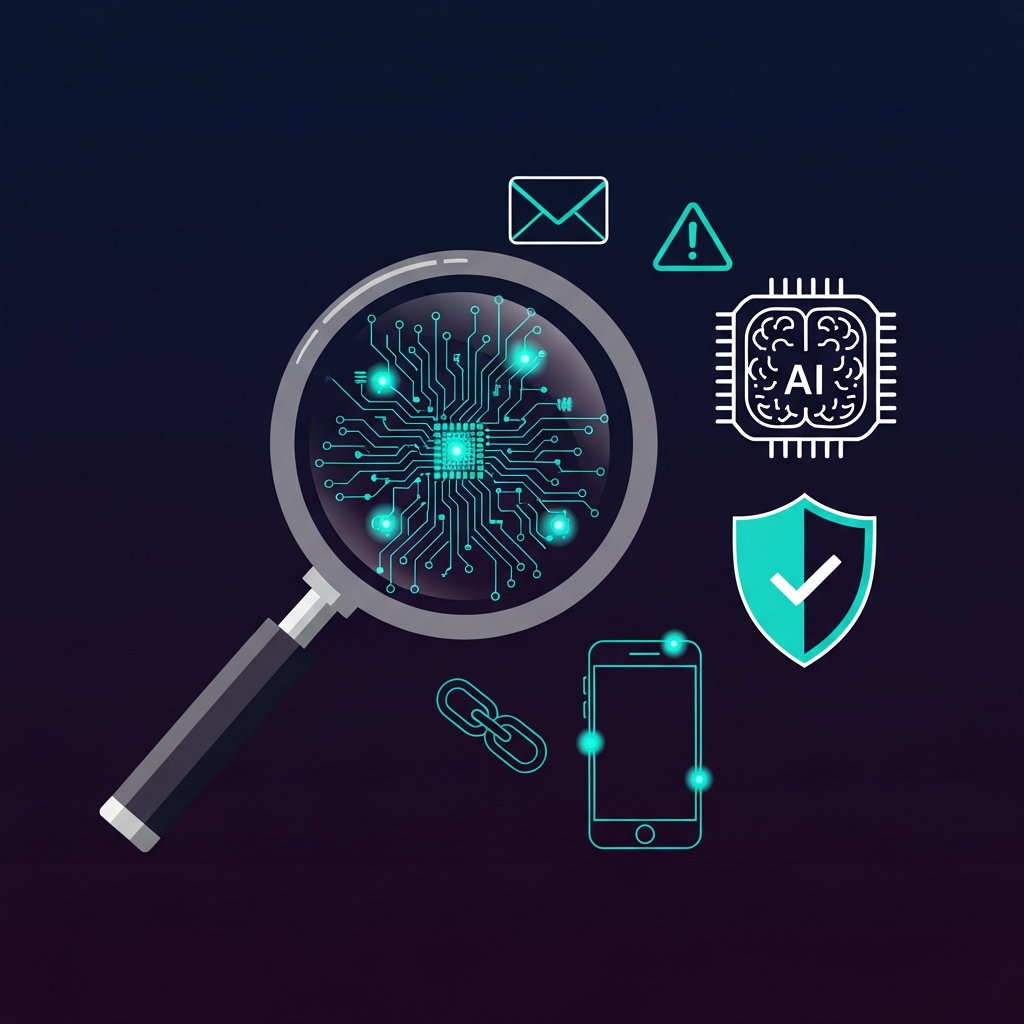
An AI scam detector is a tool that uses artificial intelligence to analyze suspicious content and determine whether it is likely a scam. It can analyze text messages, emails, links, social media profiles, images, audio, and video.
Unlike a basic scam checker that uses simple keyword rules, an AI scam detector learns from millions of scam examples. It can detect new, sophisticated scams that rule-based tools would miss because it recognizes patterns rather than specific phrases.
Think of it as a second opinion. You might feel like something is wrong. An AI scam detector can confirm your suspicion with specific evidence, or give you peace of mind that the content appears safe. The best AI scam detectors are easy to use: copy and paste a message, upload a file, or share a link, and the tool does the analysis and returns a clear result. Dangerous. Suspicious. Or safe.
The FBI Internet Crime Complaint Center receives hundreds of thousands of fraud complaints every year. The volume and variety of scam content that reaches people every day has grown well beyond what manual checking can reliably catch.
How Does an AI Scam Detector Work?
An AI scam detector works by analyzing content for patterns that are common in scams. Here is how it works in plain terms.
Training. The AI is trained on millions of known scam examples. It learns what scam messages look like. It learns what fake profiles look like. It learns what deepfake videos look like. This training is what separates AI scam detection from simple keyword filtering.
Text analysis. The AI reads messages and emails. It looks for urgency language, fear triggers, requests for personal information, generic greetings, and known scam scripts. It compares the content to the patterns it learned during training. Our guide on how a basic scam checker differs from AI-powered detection explains where rule-based approaches fall short.
Link analysis. The AI scans links without you clicking them. It checks the destination website for known phishing sites, malware infrastructure, and suspicious domain patterns.
Image analysis. The AI analyzes photos for signs of AI generation, digital manipulation, or stolen images. It can detect fake profile pictures and altered documents used as fraudulent proof of identity or payment.
Audio analysis. The AI listens to voice recordings. It detects signs of synthetic speech, unnatural breathing rhythms, and cloned voice patterns that current voice synthesis technology leaves behind. Our guide on the audio signals that indicate synthetic or cloned speech covers what to listen for when a voice message feels off.
Video analysis. The AI examines videos frame by frame. It looks for signs of deepfake manipulation including unnatural blinking, inconsistent lighting, and skin texture anomalies that face-swap models introduce. See our full guide on the visual signs of deepfake video manipulation for a detailed breakdown of what the tool is detecting.
The AI improves over time as it analyzes more content. It can recognize new scam formats that did not exist when it was first trained, provided those formats resemble patterns already in its training data.
What Should an AI Scam Detector Detect?
A modern AI scam detector should detect many types of scams across multiple formats. The FBI IC3 public safety advisories on AI-enabled fraud document the growing range of formats scammers now use to reach victims. Here is what a comprehensive tool should cover.
Phishing messages. Fake texts and emails that try to steal your login credentials or personal data. The tool should analyze language, sender patterns, and embedded links.
Fake profiles. Social media and dating profiles that use stolen or generated photos and scripted bios to build false trust. The tool should analyze images for signs of manipulation and check for patterns common in fraudulent accounts. Our guide on how to identify a fake website before entering any information covers the related problem of fraudulent web properties.
Suspicious links. URLs leading to fake websites, phishing pages, or malware downloads. The tool should scan the destination without requiring you to click.
Deepfake videos. Videos where a person's face has been replaced or generated using AI tools. The tool should analyze each frame for manipulation signals rather than just checking the overall file.
AI-generated audio. Voice clones and synthetic speech used in impersonation scams. The tool should analyze audio for unnatural patterns and synthetic cadence. Our full guide on what deepfakes are, how they are made, and why they are dangerous gives important background for understanding why audio and video detection have become necessary.
Manipulated images. Photos edited to deceive, including fake payment confirmations, forged documents, and altered screenshots.
Romance scam scripts. Messages that match patterns documented across thousands of reported romance scam cases. The tool should recognize common scripts regardless of the specific wording used.
Impersonation attempts. Messages or profiles pretending to be from banks, government agencies, delivery services, or people you know personally.
A comprehensive AI scam detector covers all of these categories. Do not settle for a tool that only checks links or only checks email subject lines.
What an AI Scam Detector Cannot Do
It is important to understand the limitations of any AI scam detector.
No AI scam detector is 100 percent accurate. Scammers adapt continuously. Some sophisticated new scam formats may not be well-represented in the tool's training data, which means they may produce lower-confidence results or be missed entirely.
AI scam detectors analyze the content you give them. They do not know your personal situation, your relationship with the sender, or the full context of a conversation. A message that would be normal from a friend you speak with regularly may look like a scam script to the tool.
AI scam detectors are tools, not guarantees. They help you make better decisions. They do not replace good judgment or the habit of verifying through official channels when something matters.
Use an AI scam detector as one layer of protection alongside strong passwords, skepticism about unexpected requests for money or personal information, and verification through sources you already trust. The CISA guidance on avoiding social engineering and phishing explains why layered protection produces better outcomes than relying on any single approach.
AI Scam Detector for Texts, Emails, and Links
Text messages, emails, and links are the most common scam formats. A good AI scam detector should handle all three well.
For texts. The detector should analyze the message for urgency language, requests for personal information, generic greetings, and suspicious sender patterns. It should flag the specific phrases that indicate a scam rather than just returning a binary result.
For emails. The detector should analyze the sender address, the message content, and any links present. It should detect phishing attempts, impersonation, and lookalike domain usage.
For links. The detector should scan links without you clicking. It should check the destination for known phishing infrastructure, malicious redirects, and suspicious domain patterns.
Common scam formats in these categories include bank account suspension texts, package delivery emails, fake order confirmations, and phishing links designed to steal login credentials. Our complete guide on what features the best scam detection tools share covers exactly what to look for when evaluating a tool for these formats.
Suspicious message, link, or profile? Scan it first.
AuthentiLens analyzes texts, links, emails, profiles, images, audio, and video. You get five free scans. Scan before you click, reply, or pay.
Try AuthentiLens free →AI Scam Detector for Fake Profiles
Fake profiles are a growing problem on social media and dating apps. An AI scam detector should be able to analyze profiles for warning signs.
Profile photos. The detector should analyze photos for signs of digital manipulation and check for visual patterns common in generated images.
Profile information. The detector should look for generic bios, inconsistent details, and patterns common in fraudulent accounts that are built quickly using templates.
Messages from profiles. The detector should analyze messages for romance scam scripts, investment fraud language, urgency tactics, and early requests for money or personal information.
Common fake profile scam types include catfishing, romance scams, and impersonation accounts targeting both individuals and brands. The Fake Profile Checker is designed specifically for this use case, analyzing uploaded profile screenshots and bios for the signals that indicate fraudulent accounts.
AI Scam Detector for Deepfakes and Manipulated Media
Deepfakes and manipulated media are now common tools in scammer arsenals. An AI scam detector should be able to analyze both audio and video.
Deepfake video detection. The detector should analyze video frame by frame. It should look for unnatural blinking patterns, inconsistent lighting across cuts, skin texture anomalies at face boundaries, and lip-sync irregularities that face-swap models introduce. The Deepfake Video Detector runs this analysis across each uploaded video frame.
AI audio detection. The detector should analyze voice recordings for the artifacts that speech synthesis and voice cloning tools produce: flat cadence without natural rhythm variation, unnatural breathing patterns, audio artifacts at word boundaries, and the absence of micro-variations in pitch and timing that all human speech naturally contains.
Image manipulation detection. The detector should analyze photos for photoshop artifacts, inconsistent lighting across regions of the same image, unnatural skin texture, and the specific geometric distortions that current image generators produce.
Common deepfake scams include fake family emergency calls using cloned voices, celebrity endorsement videos promoting fraudulent investment platforms, and impersonation videos used to authorize fraudulent transfers in business settings.
How to Choose an AI Scam Detector
Here is what to look for when choosing an AI scam detector.
Multi-format support. The best tools handle texts, links, emails, profiles, images, audio, and video. A tool that only checks links or only checks emails leaves you exposed to the majority of scam formats currently in use.
Ease of use. You should be able to paste content or upload files without technical expertise. The results should be clear enough that you can act on them immediately.
Explanation of findings. A result that says only "suspicious" without explaining why is less useful than one that identifies the specific signals found. Look for a tool that tells you what it detected, not just a verdict.
Free scans to start. The best tools offer free scans so you can test before committing. Using the tool should become a habit, which means the barrier to starting needs to be low.
Coverage of modern scam formats. A tool trained only on older scam patterns will miss AI-generated content that did not exist when it was trained. Look for evidence that the tool is regularly updated.
Why AuthentiLens Is a Powerful AI Scam Detector
AuthentiLens is designed for everyday people. You do not need to be a technical expert. You need the habit of scanning before you trust.
Here is what AuthentiLens analyzes across its ten detection tools:
- Text messages and emails: scanned for urgency language, fear triggers, manipulation scripts, and known scam patterns.
- Links: scanned without clicking for phishing infrastructure, malicious redirects, and suspicious domains.
- Social media and dating profile screenshots: analyzed for photo manipulation and fake account signals.
- Images: checked for editing artifacts, manipulation, and visual inconsistencies.
- Audio: analyzed for synthetic voice patterns, cloning indicators, and unnatural cadence.
- Video: examined frame by frame for deepfake manipulation signals.
Every result includes a clear verdict, a confidence level, and an explanation of the specific signals found. You can explore all ten detection tools to match each scan to the content type you received.
You get five free scans to start. AuthentiLens Pro is $9.99 per month for unlimited scans. The core message is simple: scan before you trust.
Frequently Asked Questions
What is an AI scam detector?
An AI scam detector is a tool that uses artificial intelligence to analyze suspicious content and determine whether it is likely a scam. It can analyze texts, emails, links, profiles, images, audio, and video, and it learns from large volumes of known scam examples rather than using simple keyword rules.
How does an AI scam detector work?
It is trained on millions of scam examples. It analyzes content for patterns common in scams across text, links, images, audio, and video. It returns a verdict with a confidence level and an explanation of the specific signals found.
What should an AI scam detector detect?
Phishing messages, fake profiles, suspicious links, deepfake videos, voice-cloned audio, manipulated images, romance scam scripts, and impersonation attempts targeting banks, government agencies, delivery services, and personal contacts.
Can an AI scam detector detect all scams?
No. No scam detector is 100 percent accurate. Scammers adapt continuously. Use an AI scam detector as one protective layer alongside your own judgment and the habit of verifying through official channels before acting on unexpected requests.
How is an AI scam detector different from a basic scam checker?
A basic scam checker uses simple rules: specific keywords, known sender addresses, or blocklisted domains. An AI scam detector learns from millions of examples and can recognize new, sophisticated scams that rule-based tools would miss because the scam uses novel phrasing or a new delivery format.
What is the best AI scam detector for consumers?
Look for a tool that handles multiple content formats, is easy to use without technical expertise, gives clear explanations of its findings, protects your privacy, and offers free scans to start. AuthentiLens covers texts, emails, links, profiles, images, audio, and video across ten detection tools.
Can an AI scam detector catch deepfakes?
Yes. A good AI scam detector can analyze video and audio for signs of deepfake manipulation, including unnatural blinking, inconsistent lighting, skin texture anomalies, and synthetic voice patterns that human listeners struggle to detect reliably.
Is AuthentiLens a good AI scam detector?
AuthentiLens analyzes messages, links, emails, profiles, images, audio, and video across ten specialized detection tools. It gives clear verdicts with explanations and offers five free scans to start. It covers every major format scammers currently use.
Scan Before You Trust
You cannot rely on your eyes and ears alone anymore. Scammers use AI to create convincing fake content across every channel you use daily. You need an AI scam detector that works at the same level.
The CISA cybersecurity best practices guidance emphasizes that no single measure is sufficient on its own. An AI scam detector is the tool that handles the content analysis layer. Your judgment and verification habits handle the rest. AuthentiLens gives you five free scans to check texts, links, profiles, images, audio, and video. Use them before you trust anything suspicious.